Trezor Login
When it comes to protecting cryptocurrency, Trezor is one of the most trusted names in the world of hardware wallets. Instead of logging in with a username and password, Trezor uses a physical device and strong security features to help you access your crypto safely. Many people search for “Trezor Login” expecting a traditional login page—however, Trezor works very differently. Understanding how Trezor login actually works can help you avoid scams, keep your funds secure, and manage your digital assets confidently.
This article explains everything in plain language: what Trezor login means, how to do it properly, common mistakes to avoid, and how to stay safe.
There Is No Traditional “Trezor Login” Page
One of the most important things to know is that Trezor does not have a typical login form like websites or apps. There is no username, no password, and no email login. Instead, your access to your wallet is controlled only through:
Your Trezor hardware device
Your PIN
Your recovery seed (for backup only, never for login)
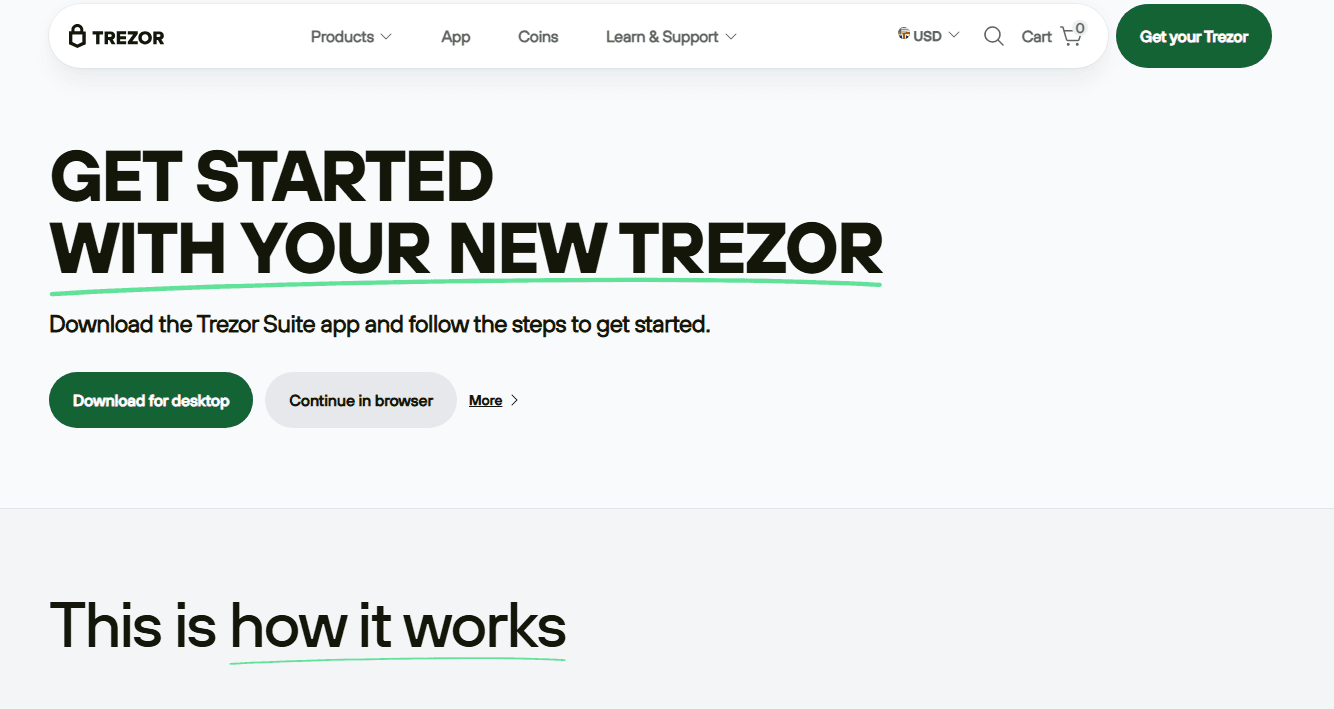
So when people say “Trezor login,” what they really mean is accessing their wallet through Trezor Suite, the official app for managing crypto with a Trezor device.
How Trezor Login Actually Works
Here is the correct and safe process to “log in” to your Trezor wallet:
Step 1: Go to the Official Trezor Website
Always begin by visiting the official site. This ensures you avoid fake websites pretending to be “Trezor login” portals.
Step 2: Open Trezor Suite
You can use:
Trezor Suite Desktop App (recommended)
Trezor Suite Web (requires Trezor Bridge)
Trezor Suite is the secure interface where you will see your accounts, balances, and transaction options.
Step 3: Connect Your Trezor Device
Plug your Trezor Model One or Model T into your computer using the USB cable. The device screen will power on automatically.
Step 4: Enter Your PIN
To unlock your hardware wallet, you must enter your PIN.
This PIN protects your device if someone physically steals it.
Step 5: Access Your Wallet
Once your device is unlocked, Trezor Suite will show your dashboard, accounts, and assets. You are now successfully “logged in.”
Why Trezor Uses Hardware Login Instead of Passwords
Most online accounts use emails and passwords, which can be hacked, stolen, or exposed in data breaches. Trezor does not rely on any online login system.
Instead, your wallet access depends on:
A physical device only you hold
A PIN only you know
A recovery seed stored offline
This method makes it almost impossible for remote hackers to break into your account.
Understanding the Key Parts of Trezor Login
1. The Trezor Device
Your hardware wallet is the heart of your login process. Without it, no one can access your crypto—even if they have your computer.
2. The PIN
You set a PIN during setup.
You must enter this PIN every time you connect the device. If someone enters the wrong PIN too many times, the device wipes itself for safety.
3. The Recovery Seed
This is not part of the login process.
It is only used if you need to recover your wallet on a new device.
Never type your recovery seed into a computer or website.
Common Login Mistakes People Make
Mistake 1: Searching for a “Trezor login page”
Scammers often create fake login pages to steal seed phrases. Trezor does NOT have a login website.
Mistake 2: Typing the recovery seed online
Your recovery seed should never be entered on a keyboard.
If a site asks for it, it is a scam.
Mistake 3: Downloading fake apps
Only download Trezor Suite from the official Trezor website.
Mistake 4: Using the wrong USB cable
Some cables only support charging, not data transfer. If Suite does not detect your device, try a different cable.
How to Keep Your Trezor Login Safe
Trezor already gives you strong protection, but these extra steps make your security even stronger:
1. Always double-check website URLs
Fake websites often look identical to the real one. Bookmark the official site.
2. Enable a passphrase
This acts like a “second password,” giving your wallet an extra hidden layer.
3. Never share your PIN
Trezor will never ask for it outside the device.
4. Keep your recovery seed offline
Write it down and store it safely.
Never take a photo or store it digitally.
5. Update firmware and Trezor Suite regularly
Updates fix bugs, improve security, and add new features.
What to Do If You Cannot Log In
If Trezor Suite is not detecting your device, try the following:
Use a different USB port or cable
Restart your computer
Check that you installed Trezor Bridge (for web version)
Install updates for Trezor Suite
Try using the desktop app instead of the web version
If your PIN is lost or forgotten, you must reset the device and restore it using your recovery seed.
Final Thoughts
“Trezor login” is not a typical online login. Instead, it is a secure process that relies on a hardware device, a PIN, and offline recovery tools. By using Trezor Suite and following proper safety steps, you can manage your crypto easily and confidently, knowing your assets are protected from online threats.